|
|
CoronaCactus Nursery LLC. �Cactus & Succulent
growers. |
||||||
|
|
|
|
|
|
|
||

|
Echinomastus
johnsonii
Notes: We
recognize three forms of Echinomastus
johnsonii. E.
johnsonii ssp. johnsonii has
pink flowers. E. johnsonii ssp. lutescens has yellow flowers. E. johnsonii ssp. arizonicus can have both
colors. They also all differ in geographic distribution and flowering times. |
Featured Plant � Johnson�s
Pineapple Cactus Echinomastus johnsonii (Engelmann)
E.M. Baxter 1935 Cactaceae (Cactus Family) Synonyms: Echinocactus johnsonii Engelmann 1871, Ferocactus johnsonii (Engelmann)
Britton & Rose 1922, Thelocactus
johnsonii (Engelmann) W.T. Marshall 1942, Neolloydia johnsonii (Engelmann) L. Benson 1969, Sclerocactus johnsonii (Engelmann)
N.P. Taylor 1987, Pediocactus johnsonii
(Engelmann) Halada 1998 Form/Habitat:
Form/Habitat: The habitat of Echinomastus
johnsonii is North America, in the Mojave desert of southeast California
and northwestern Arizona, from southern Nevada and southern Utah. Growing in
sandy/gravely soils in hills and alluvial fans from 1500 to 4000 feet
elevation. It�s a small to medium solitary plant. Branching only occurs from
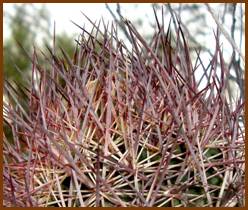
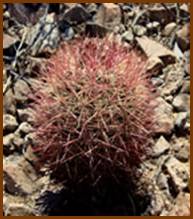
damage to the main growing point. This plant has a globular to cylindrical
shape with spines completely obscuring the stem. Spines are a pink/rose to
tan color that fade to a dull grey or black with age Type
locality: Discovered near St. George in Southern Utah by J.E. Johnson
in 1870. Size: Typically
growing to around 2 to 4 inches in diameter and 4 to 10 inches tall. Starting
out as globular and later becoming more cylindroid
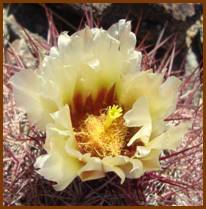
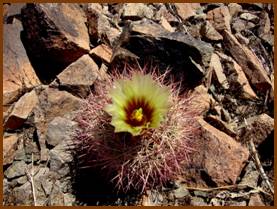
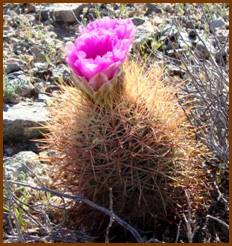
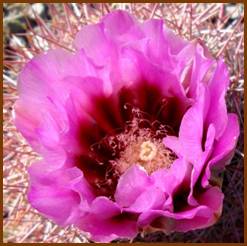
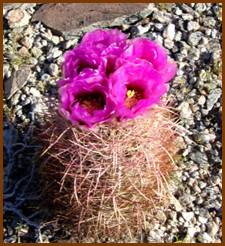
to resemble the shape and size of a pineapple. Flowers/Fruit: The
flowers of Echinomastus johnsonii
are about 2 to 3 inches in diameter and appear March thru May. They are
produced from new areoles at the apex of the plant. Not always opening fully,
due to the dense spination. Flowers are a bright dark pink with a dark purple
center. The fruit are green and when ripe, turn a brown/tan color. They will
split open near the base and up the side to release the seeds. Many times
seedlings can be seen growing at the base of the mother plant giving the
appearance of a cluster. Sun/Water: Echinomastus johnsonii can take full
sun to get the proper spination. Often in habitat these plants are growing
out in the open completely unprotected. In cultivation, watering should mimic
natural habitat as best as possible. Give light waterings
in winter, especially during Jan/Feb, tapering off in mid-March. From March
to June keep fairly dry with just occasional misting. Start again with light waterings from August to September and into the winter. Propagation: Seeds.
Challenging to grow from seed. These plants dislike any peat or organic
matter in their pot culture soil mix. Do not use a commercial cactus soil or
any type of potting soil. Only non-organic matter consisting of sand, loam,
grit, pumice or DG (decomposed granite) would be best. Books/Websites:
Books/Websites: The Native Cacti of California; L. Benson. The Cacti of Arizona; L. Benson. The Cactus Family;
E.F. Anderson. More websites can be found on our Reference
Links page. |
||||||||||
|
|
|
||||||||||
|
Echinomastus
johnsonii� �(Engelmann) E.M. Baxter 1935 Not
a very common plant (or Genus) seen in collections. |
|||||||||||
|
|
|
|
|||||||||
|
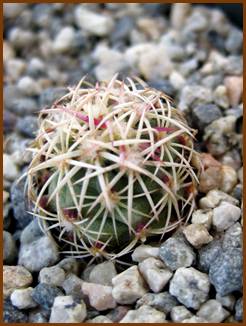
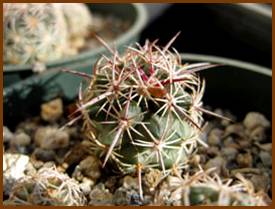
The photos above are E. johnsonii ssp. lutescens seedlings at different stages up to 2 years old. Grown
from habitat seed collected near Wickenburg, AZ. |
|||||||||||
|
|
|||||||||||
|
|
|
|
|||||||||
|
|
|
|
|||||||||
|
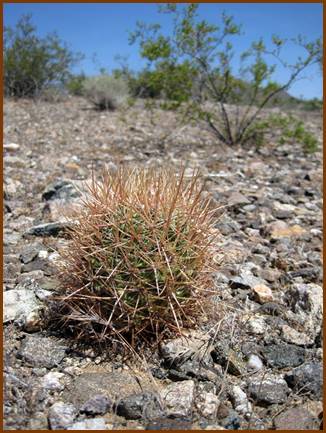
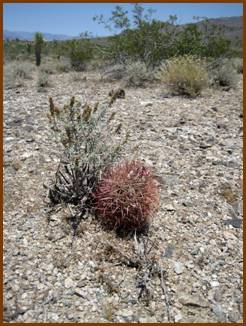
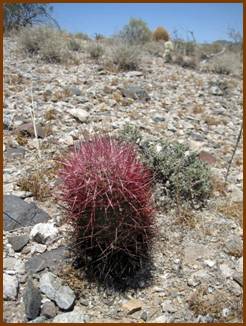
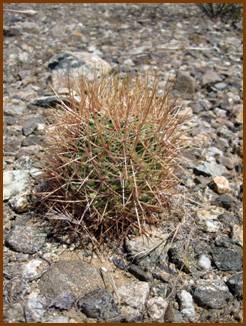
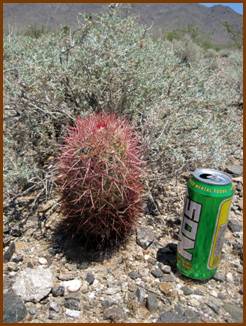
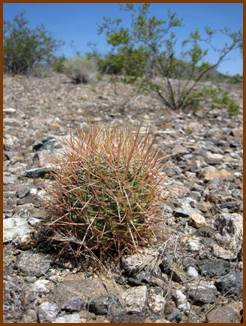
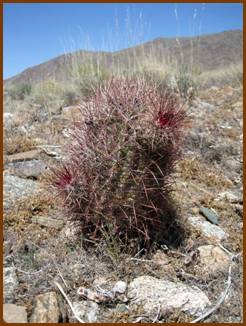
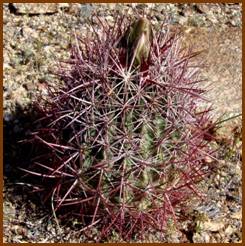
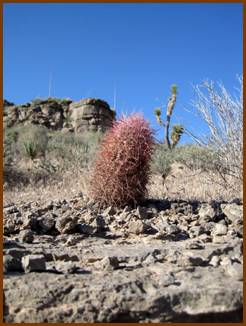
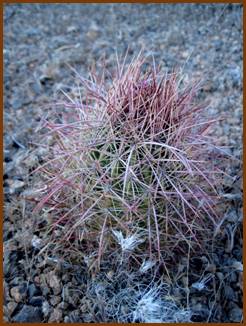
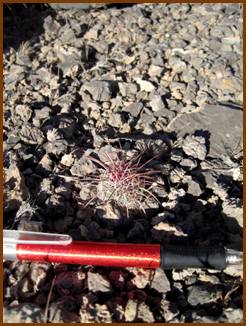
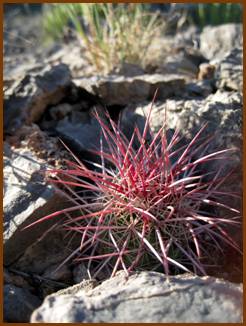
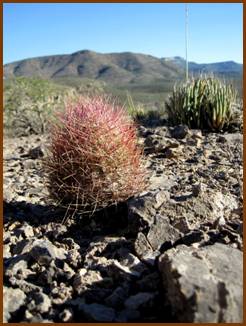
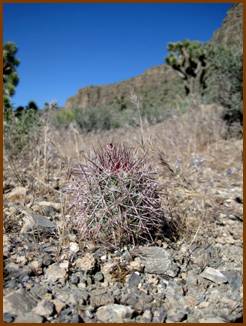
Habitat photos above are from near
Meadview, AZ. These plants show a good range of spine colors. From the
traditional pink, to bright red, to maroon, to almost black and some very
interesting gold/yellow spined forms. We happened to find one plant that was
branching from the sides with no signs of apex damage. A very rare sight! |
|||||||||||
|
|
|||||||||||
|
|
|
|
|||||||||
|
|
|
|
|||||||||
|
Echinomastus
johnsonii� ssp.
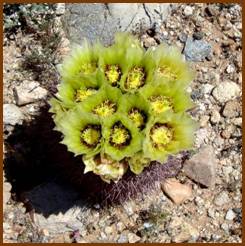
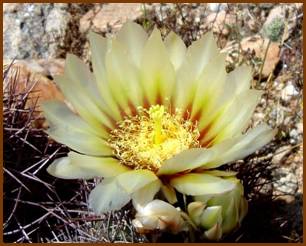
arizonicus Habitat photos above are from Butler
Valley, Yuma Co.,, AZ. ��Photos By Peter Breslin |
|||||||||||
|
|
|||||||||||
|
|
|
|
|||||||||
|
Echinomastus
johnsonii
ssp. lutescens Habitat photos above are from near
Wickenburg, AZ.��� Photos By Peter Breslin |
|||||||||||
|
|
|||||||||||
|
|
|
|
|||||||||
|
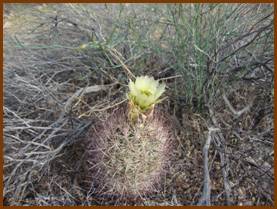
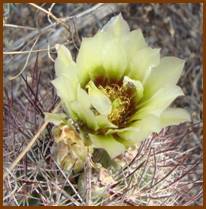
Echinomastus
johnsonii Habitat photos above are from near
Meadview, AZ. ���Photos By Peter Breslin |
|||||||||||
|
|
|||||||||||
|
|
|
|
|||||||||
|
|
|
|
|||||||||
|
Habitat photos above are from near the
Grand Canyon west entrance, a little past the Grand Canyon Ranch near the
Hualapai Indian Reservation. The plants at this locale were more uniform in
their spine color, however, we found quite a few
more seedlings here. Always a good sign! |
|||||||||||


|
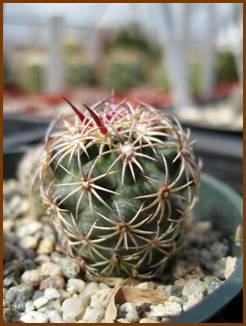
All
photos taken are from our personal collection or our sales plants. (Except
of course, none of the habitat plants or where noted) |
|
Plant of the Month Archives For a full page view with photos click
here June 2008 � Cylindropuntia bigelovii July 2008 � Ferocactus cylindraceus August 2008 � Echinocereus engelmannii November 2008 � Pachypodium namaquanum December 2008 � Copiapoa humilis January 2009 � Turbinicarpus lophophoroides February 2009 � Astrophytum asterias April 2009 � Thelocactus bicolor May 2009 � Mammillaria theresae August 2009 � Matucana madisoniorum September/October 2009 � Escobaria sneedii November/December 2009 � Opuntia basilaris January
2010 � Leuchtenbergia principis February
2010 � Oreocereus pseudofossulatus March
2010 � Cochemiea poselgeri Summer
2010 - Echinomastus erectocentrus
var. acunensis August
2010 � Cylindropuntia ramosissima Spring
2011 � Echinomastus johnsonii |
Copyright
� 2008 - 2011 CoronaCactus Nursery LLC.������������������ ��������������������������������������������������������������������������������������������������Page
Update:
All
photos are property of CoronaCactus Nursery LLC.� (except where noted)��������� �������������������������������������������������������������������������������8-14-11
All photos and text are property of CoronaCactus Nursery LLC.
Any reproduction, in whole or in part without written permission
is prohibited.